_JPG.jpg)


Leviticus: Returning to the Garden

Sermon 433 St. Martin’s 187 (Riverway) 10/4/26
Leviticus is one of the most misunderstood (and well, boring) books of the Bible. How many of us have tried to read the Bible cover to cover only for that dream to slowly die somewhere in Leviticus?
It is a hard book to read and even harder to understand…because most of it is just a bunch of law codes. Do this and don’t do that. It contains everything from:
· Which bugs you can eat (Leviticus 11)
· Moldy Clothes Protocol (Leviticus 13)
· Prohibition of wearing clothes with mixed fabrics (Leviticus 19)
· Command not to trim your beard (Leviticus 19)
I have never seen a children’s Bible include anything from Leviticus. Our Sunday lectionary only features the book twice in three years, and both times it comes from the same chapter.
The truth is, this book is worth exploring even if it’s not easy to understand or entertaining. And it’s even more important to understand that Christians did not throw out Old Testament books, like Leviticus, even though our relationship with the Law has changed because of Jesus.
Leviticus has stayed in the canon of Scripture because it mattered to the people of God, and it mattered to Jesus. It has its place in God’s work of salvation, and when we look closely, we realize it teaches us some important lessons about the holiness of God and our relationship to him.
As modern readers, we must adjust our thinking when entering a text like this because it describes a world very different from ours. These are strange laws from a strange time, but some of them were honestly strange for the Israelites too.
They were wandering in the desert. They were nomads, without a homeland, and holding onto a promise. Many of the laws make sense when you factor in that they protected communal health and hygiene while everyone was camping year after year.
But some of them seem to have no logic at all, and it’s more like God just saying, “Do it because I told you so.”
The Year of Living Biblically Some of you may have read a book that came out 20 years ago called The Year of Living Biblically by A.J. Jacobs.
As the title mentions, the author spent an entire year trying to fulfill all 613 laws in the Old Testament. It’s a fun read as he attempts to live out every ancient commandment in modern times.
During that year, he kept a checklist of the commandments he still needed to fulfill. One day, in New York City, a guy came up to him and asked why he was dressed so strangely. Which makes me wonder if this guy asking the question had ever been to New York. Megan and I once saw a guy in a Big Bird costume walking around Central Park, so dressing like an Israelite doesn’t seem that far-fetched.
Anyway, A.J. told the stranger he was trying to live out the biblical commands, which included what he could wear. The guy half-jokingly said, “Well, I’m an adulterer; are you going to try to stone me?” A. J. then pulled some pebbles from his pocket and said, “Actually, could I? I need to check that one off my list.”
We may not go that far, but how can we appreciate the laws written in Leviticus? The best way to know what’s going on is to clear our minds of our preconceived notions of this book and address the main problem it tries to resolve:
How shall God be among his people after the Fall in the Garden of Eden?
To understand Leviticus, you have to understand the Garden of Eden story. No barriers separated God from his creation. God walked and talked with Adam. There was no fear, shame, or anger in the Garden.
There were still commands. God told Adam, “You are free to eat from any tree in the garden; but you must not eat from the tree of the knowledge of good and evil.”
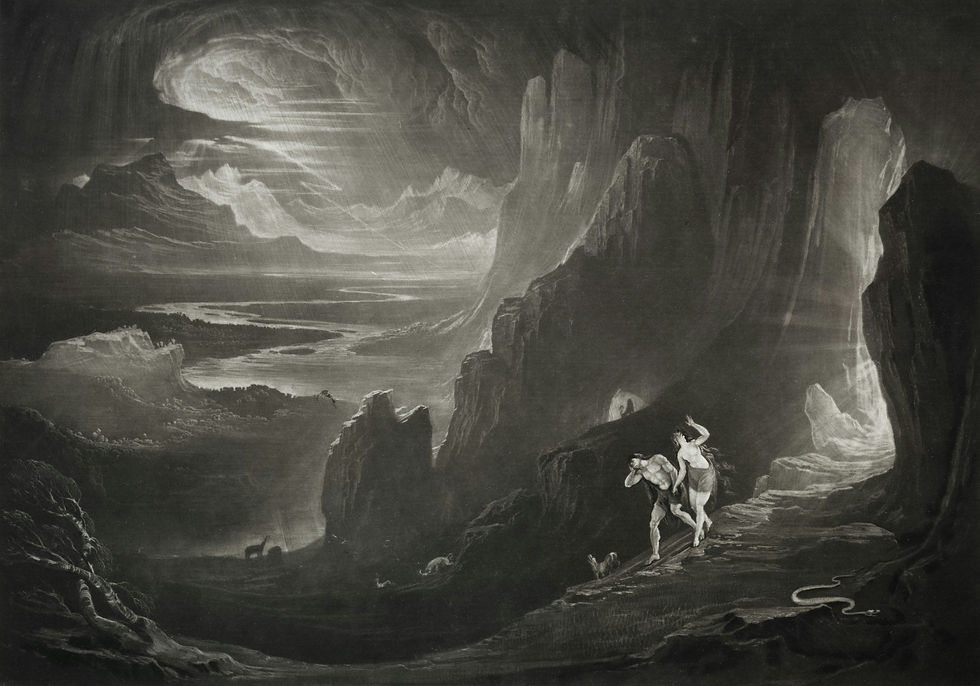
The consequence of Adam and Eve’s choice to break that command was exile from the Garden, which also meant they lost the nearness they had enjoyed with their Creator. They were going to toil in the soil east of Eden; there would be pain, and there would be death.
How could humanity ever return to its former state in the Garden of Eden, where nothing separated them from God? Was it even possible to return to paradise?
The simple answer is ‘no.’ You can’t put the genie back in the bottle. But God was not done with humanity, even after their rebellious decision. God not only decided to rescue his people from Egyptian slavery, but then he was going to tabernacle (to dwell) among his people as they wandered in the desert for 40 years.
The tabernacle (this tent of meeting) would be where God’s glory dwelt on earth. It would be the place the community came to connect with God, to seek forgiveness, and be restored into right relationship with him and one another.
The tabernacle would come to represent a retelling of the Genesis story.
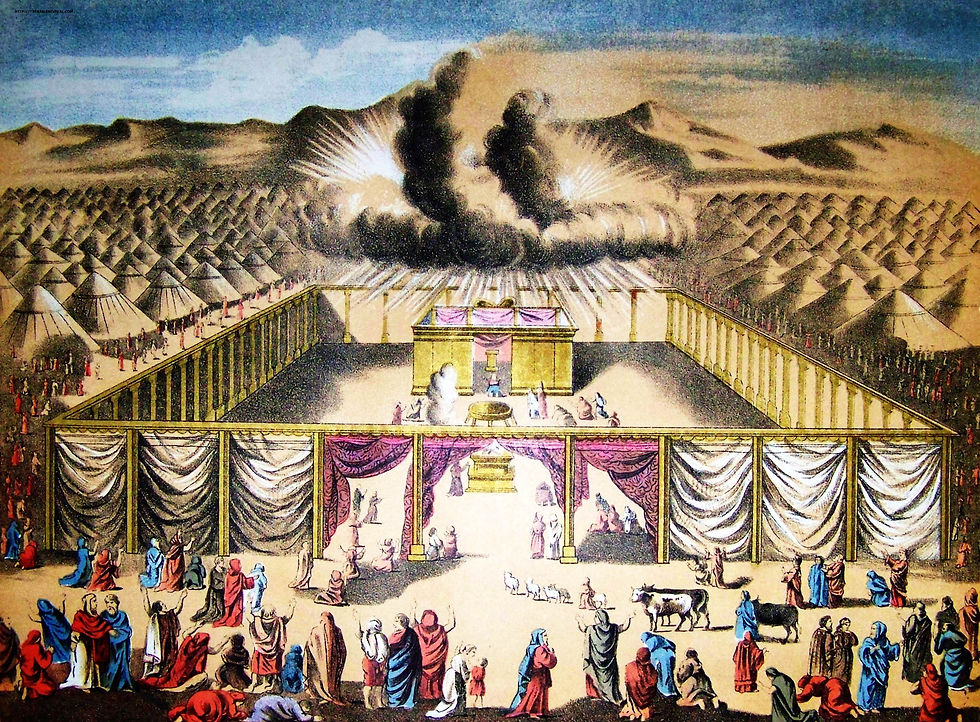
Eden’s gates were permanently closed, but God was not bound in heaven; he again took the initiative and dwelt with his people. The tabernacle itself was constructed to mirror the creation story: the outer courts were like the watery chaos in Genesis 1, the holy place inside the tabernacle was like the cosmos, and the holy of holies represented the Garden of Eden.[i]
Walking into the tabernacle’s holy place, you would’ve seen woven tapestry made of deep purples and blues to represent the heavens and the earth. The menorah, a massive candelabrum, was a visible representation of the Tree of Life, with its branches of light.
The Holy of Holies was separated by a veil embroidered with cherubim, guarding what lay behind it, just like the cherubim that guarded the gates of the Garden of Eden.
Behind the veil, in the Holy of Holies was the ark of the covenant, which was the footstool of God, and the place where heaven and earth met. God’s glory resided here, and there was not a more sacred place on earth than this tabernacle version of the Garden of Eden.
But if humanity was banished from the Garden, who could enter such a sacred place?
Only one person could enter, and it wasn’t even Moses; it was his brother Aaron, the high priest. In this case, the high priest represented Adam, or at least he was the Second Adam. One day a year, the Genesis story was retold in reverse, and that’s Leviticus 16.
On the Day of Atonement, this Second Adam moved from the courtyard, representing the land of expulsion that was east of Eden, and made his way westward, into the tabernacle, through the holy place, past the cherubim that guarded the Holy of Holies, and for a brief moment this Second Adam returned to the Garden of Eden and was in the near presence of God.
He was only one person, but the high priest represented the entire community of the faithful. All the people who had tried to follow God and had failed.
In the Holy of Holies, Aaron returned to the original point of creation where everything went awry, and instead of selfishly taking the fruit, he simply obeyed God’s commands. He poured out the atoning blood in hopes of reestablishing the covenant relationship with God.[ii]
In that fateful act, he was saying, “I’m sorry; I repent on behalf of myself, my family, and my entire nation. We may not be able to enter the Garden, but may this sacrifice ensure that you stay with us.”
Adam’s downfall was rewritten each year the high priest entered the Holy of Holies. To understand Leviticus, you have to know Genesis.
Genesis is the story of how humanity went from perfect life with their Lord to exile and death. Leviticus, as strange as it may sound with its list of rules about what’s clean and unclean, gives us the path back to God’s house, back to dwelling with him unhindered and unafraid.
Leviticus may be about holiness, but holiness was never the end-all, be-all goal; holiness was a means to an end so that humanity could once again live in perfect freedom with God. You get rid of Leviticus, and you get rid of the original pathway back to God.
Fast forward a bit, and you have a rabbi who deeply cares about the uncleanness codes; he has opinions about what can or can’t be done on the Sabbath, and when is the appropriate time to stone an adulterer.
But he does something that no other rabbi would dare try. He forgives sins.
Only God could forgive sins, and everyone knew it was done according to the laws established in Leviticus: an atoning sacrifice properly offered by a priest at the Temple.
When this teacher upped the ante by claiming that if you had seen him, you had seen the Father, he had crossed the line for many.
How could that be? No one has seen God, and the person who came closest to that kind of encounter was Caiaphas, the high priest, on the Day of Atonement. Who did this guy think he was comparing himself to the high priest, this man who took on the role of the Second Adam and represented the people?
It didn’t take long for the early followers of Jesus to begin connecting the dots from their study of the Torah and what God was doing in the person of Jesus of Nazareth.
The author of Hebrews sums it up perfectly:
“Therefore, since we have a great high priest who has ascended into heaven, Jesus the Son of God, let us hold firmly to the faith we profess. For we do not have a high priest who is unable to empathize with our weaknesses, but we have one who has been tempted in every way, just as we are—yet he did not sin. Let us then approach God’s throne of grace with confidence, so that we may receive mercy and find grace to help us in our time of need.”[iii]
Jesus is the true Second Adam, the only one worthy of entering the Garden on our behalf to rewrite our story. As the Son of God, he tabernacled with his people, just as God had done all those years ago in the desert. And he goes before us: in life and death he leads us closer to himself, in the nearer presence of our Heavenly Father.
Jesus did not come to abolish the law but to fulfill it; not one letter, not even the smallest stroke of a pen, would pass away until all things were accomplished in and through him.
And yet, something as simple as faith in him means that he will take us by the hand and bring us into God’s throne room where we can stand in humble confidence before our Creator as a restored and redeemed Son of Adan and a Daughter of Eve.
And Jesus alone can do this because on the cross, he was not only the high priest making sacrifice on behalf of his people, but he was the atoning sacrifice.
Since we have a great high priest, let us hold firmly to the faith we profess.
[i] In the same way Moses had met with God on Mount Sinai, so now the people could meet with their God through the sacrifices that happens in the court of the tabernacle. This tent was seen as a portable Mount Sinai, and the pathway back to relationship with God.
[ii] Who Shall Ascend the Mountain of the Lord: A biblical theology of the book of Leviticus (2015) by Michael Morales pg. 177.
[iii] Hebrews 4:14-16


Comments